
How We Analyzed the EU Market to Identify the Best Country for Production
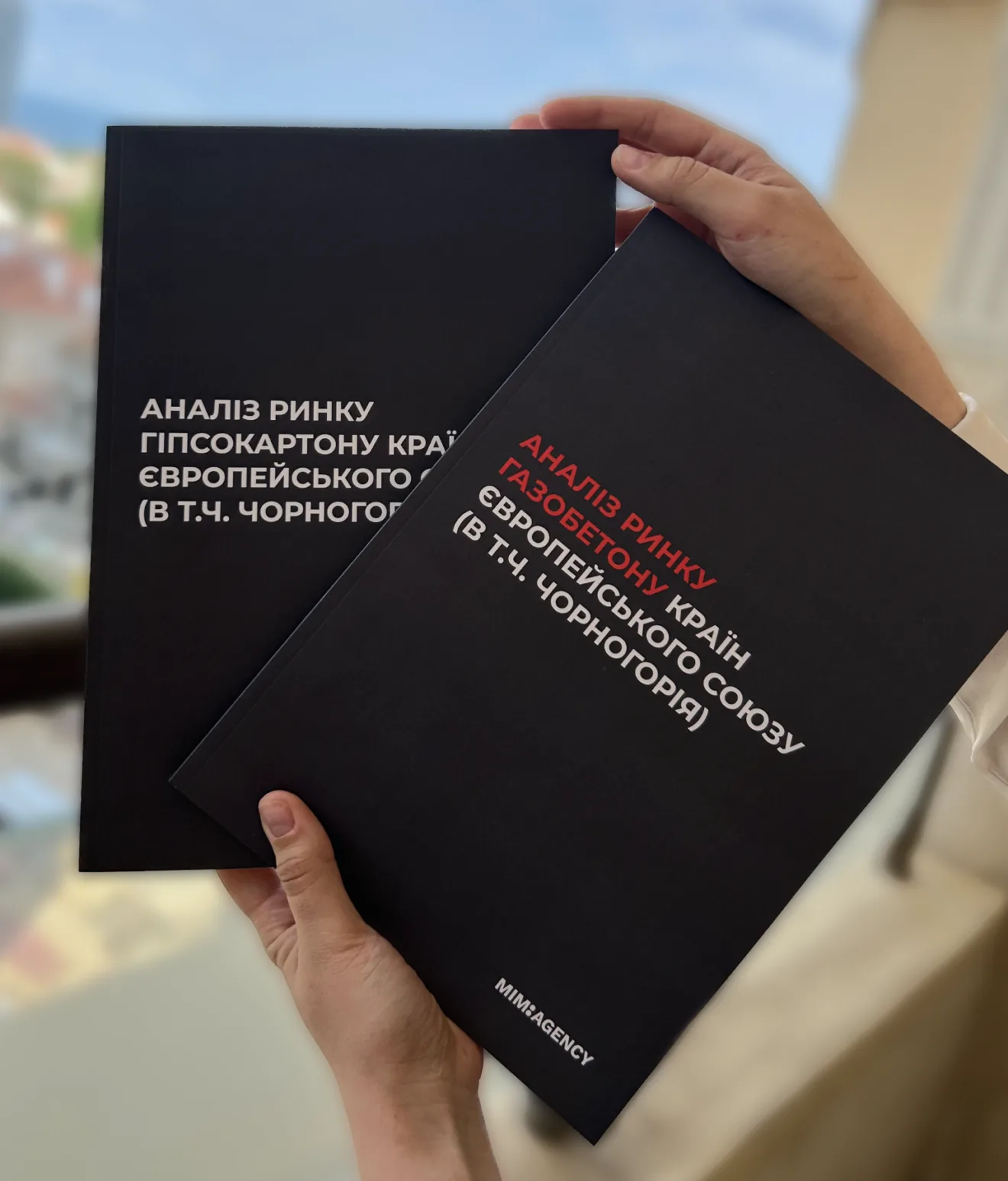
The MIM:AGENCY team conducted an in-depth study of the plasterboard and aerated concrete market in Europe to assess its commercial attractiveness for investors and manufacturers. The focus was on key macroeconomic factors, import and export dynamics, the competitive environment, and regulatory barriers.
Context and client request
MIM:AGENCY was approached by a client, a manufacturer of building materials, interested in entering the European Union markets with products such as gypsum plasterboard and aerated concrete.
The team was tasked with assessing the commercial attractiveness of European markets, identifying promising areas for import, localization of production, or export, and finding competitive advantages in these markets.
The client expected not just dry analytics, but a data-driven solution that would allow them to:
- set priorities in their product line;
- select the most profitable countries for scaling;
- avoid unjustified costs of launching in unprofitable markets.
Research methodology: how we worked

The project was structured in several logical stages:
- Workshop with the client. We held a strategic session with the client’s team.
- Formulation of the research program. Based on the client’s tasks and our experience, we formed an analytical structure consisting of 15 sections, including: analysis of volumes, prices, production, import/export, competitors, audience, assortment, prospects, PEST factors, and an integrated attractiveness index.
- Data collection and processing. We conducted descriptive and search research, focusing in particular on countries such as Greece, Romania, Montenegro, and Cyprus as countries with dynamic construction sectors, actively importing both materials and showing growing demand for energy-efficient construction solutions.
- In-depth interviews with experts. We spoke with the heads of development companies, logistics specialists, and distributors of building materials, as well as local manufacturers. This allowed us to test our hypotheses in the field and not rely solely on statistics.
- Analytical processing. We performed mathematical and statistical analysis, normalized prices, permits, and production per capita, built a country attractiveness index, assessed competitive concentration, and calculated the potential profit in each country.
- We prepared a comprehensive report and research. The client received a complete PDF report, interactive country assessment tables, recommendations, and a complete picture of the market situation.
Key insights
- Gypsum plasterboard is in stable demand in countries with high urbanization rates.
- Aerated concrete is growing in popularity due to its environmental friendliness and energy efficiency, with strong domestic production in Romania and export potential to southern European countries.
- The cost of building permits and local regulatory barriers significantly affect the speed of market entry.
- Significant potential has been identified in the B2B sector.

Aerated concrete production by country
- Germany
- France
- Poland
- Netherlands
- Spain
- Ireland
- Other countries

Imports: aerated concrete
- Belgium
- Netherlands
- Ireland
- Denmark
- Lithuania
- Slovakia
- France
- Czech Republic
- Latvia
- Poland
- Other

Consumption: aerated concrete
- Germany
- France
- Poland
- Netherlands
- Italy
- Ireland
- Spain
- Romania
- Belgium
- Other

Consumption: gypsum plasterboard

Production: gypsum plasterboard

Imports: gypsum plasterboard
PEST analysis
As part of our case study, the MIM:AGENCY team used the strategic tool PEST analysis to identify key external factors influencing the development of the plasterboard and aerated concrete market in EU countries. The macro environment analysis provided insight into the regulatory, economic, social, and technological changes that create risks and open up new opportunities for business.
European building materials markets operate in a highly regulated environment that promotes sustainable development and energy efficiency.
Political factors:
- Uniform EU standards: countries such as Germany, Austria, the Netherlands, and France have strict requirements for thermal insulation, environmental friendliness, and recycling, which directly influences the choice of building materials.
- Government incentives: Programs such as RE2020 (France) and Renovation Wave (EU) and tax breaks for insulation (Poland) are stimulating demand for aerated concrete and gypsum board.
- Infrastructure investments: Denmark, Portugal, and Spain are launching large-scale urban projects that generate demand for interior finishing (gypsum board) and construction (aerated concrete).
Economic factors:
- Growth of the construction market: urbanization is driving demand in Germany, Poland, and the Netherlands, where both materials are actively used.
- Renovation of old infrastructure: In Latvia, Romania, and Italy, the main demand is not for new construction but for modernization, which is driving sales of gypsum board and facade blocks.
- Pricing under pressure: Supply chain disruptions and global inflation have hit raw material costs, which is particularly noticeable in Hungary, Belgium, and Greece.
Social factors:
- Eco-trends: gypsum board and aerated concrete are popular among developers who declare the use of secondary or “green” materials, especially in Denmark, Sweden, and Finland.
- Housing demand: In Italy, Spain, and Ireland, there is steady growth in urban construction, creating demand for interior walls (gypsum board) and load-bearing structures (aerated concrete).
- Tourist regions: Greece, Cyprus, and Croatia are actively renovating hotels and apartments, where aerated concrete provides sound insulation and gypsum plasterboard provides visual quality of finish.
Technological factors:
- Production automation: leading countries (Germany, France, Sweden) are actively modernizing their factories, which allows them to reduce costs by 12-18%.
- Introduction of BIM: digital modeling of construction projects (especially in Western Europe) requires precise specifications for gypsum board and aerated concrete – brands that integrate into BIM platforms are winning out among contractors.
- Recycling and circular economy: Austria, Belgium, and Finland are promoting the use of reusable gypsum board.
Doing Business rating
When evaluating markets for expanding aerated concrete production, we took into account the ease of doing business, access to permits, tax burden, logistics quality, infrastructure reliability, and energy supply. This multifaceted analysis allows us to not only assess the legal and financial conditions, but also determine the speed of market entry and evaluate risks.

Gypsum plasterboard and aerated concrete: business rating
Here is what we found during our comprehensive analysis:
- Northern and Baltic Europe – best for a quick start without bureaucratic obstacles.
- Central Europe is good for trade but needs to adapt to regulatory nuances.
- Western Europe is ideal for long-term capital investments and brand building.
- Southeast Europe is suitable for low-cost production facilities, provided that energy risks are managed.
This analysis helps to strategically select a country for a specific purpose: market entry, plant construction, or logistics hub, taking into account real conditions, not just formal indices.
Conclusion
Based on a comprehensive analysis of the gypsum board and aerated concrete market in Europe, the MIM:AGENCY team has concluded that entering this segment is economically viable and strategically advisable, provided that the right country and format of presence are chosen.
The European market is showing stable growth in demand, supported by urbanization trends, government support for renovation programs, and demand for energy-efficient materials.

Gypsum plasterboard: attractiveness index
This study has become more than just a source of data – it has become a tool for making important decisions, giving clients confidence in their next steps.
