
Real-time analytics: a revolution in business analytics and marketing
Real-Time Analytics is redefining how companies operate — enabling live monitoring, faster reactions, and personalized marketing in the data-driven era.
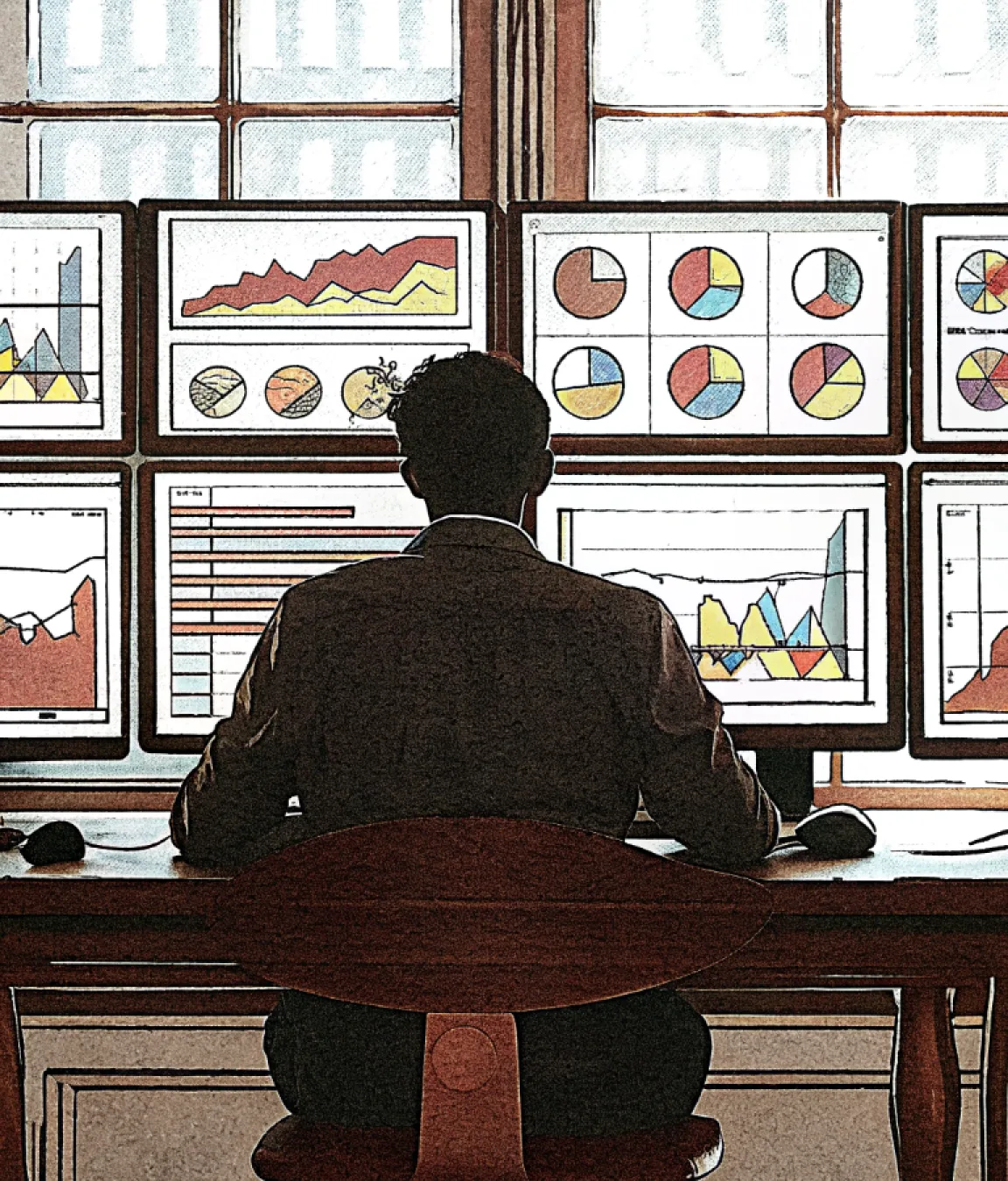
Real-time analytics is the process of collecting, processing, and gaining insights from data as it is generated, without delay. In other words, data is analyzed in real time, immediately after it appears, unlike the traditional approach, where information is accumulated and processed in batches (for example, once a day or once a week). The key aspect here is speed: businesses receive the most up-to-date information instantly and can immediately respond to changes in the situation.
Data is generated everywhere – e-commerce transactions, geolocation, server activity, online user behavior, IoT sensor readings, and more. By analyzing it immediately, a company understands what is happening “here and now” with customers or business processes, rather than after the fact.
Real-time analytics and why it is critically important
Why has real-time analytics become so important now? First, most data quickly becomes “outdated” – its value fades over time. Therefore, the ability to instantly turn fresh information into action gives businesses a competitive advantage. Second, today’s market requires companies to be extremely flexible and make quick decisions. The volume of data is exploding, and businesses can no longer afford to make decisions based on outdated information.

It is no surprise that studies show that the implementation of real-time analytics directly impacts success: 80% of companies reported increased revenue thanks to the use of real-time data. In other words, we are entering a “revolution” in operational analytics: to remain competitive, businesses must learn to obtain “the right information at the right time” and apply it immediately.
Benefits of Real-Time Analytics for Business and Marketing
Real-time analytics is changing the way businesses approach decision-making. Thanks to instant data processing, companies can see the big picture as events unfold. This allows them to react faster – from changing delivery routes due to traffic jams to quickly adjusting prices or product ranges. Decisions are based on current metrics rather than old reports, so businesses can act flexibly and accurately, minimizing wasted time and resources.

It also has a radical impact on marketing and customer experience. Marketers receive real-time feedback, see which channels are working, and immediately reallocate budgets. Personalized offers are generated instantly: the user views a product, and the system already selects a discount or accessory. Banks, in turn, detect fraud before the customer even notices the problem, and retailers track queues and open additional cash registers. This creates a continuous service that adapts to the person, not the other way around.
Operational analysis is also becoming the foundation of automation and forecasting. Machine learning algorithms allow us not only to react, but also to predict. Businesses gain the ability to act proactively, eliminating risks before they arise. As a result, companies that operate in real time are faster to launch new products, more accurate in their strategies, and ahead of competitors who are still living in the past cycle of analytics.
Industry breakdown: how real-time analytics is transforming different sectors
Real-time analytics is now beneficial in many areas, from finance and retail to healthcare and logistics.
In different industries, real-time data analysis offers unique opportunities and use cases. Let’s take a look at how real-time analytics is changing approaches in different industries.
Retail
In the retail business, real-time data analytics has become one of the key drivers of success. Retailers use operational data to personalize the customer experience, implement dynamic pricing, and optimize supply chains. For example, data from POS terminals and product scanners is collected instantly, allowing sales of each item to be tracked every minute.
If a product suddenly becomes in high demand, the system immediately signals this, and managers can quickly replenish stocks of that product, avoiding shortages on the shelves. Similarly, if demand for a particular product falls, real-time data makes it possible to quickly adjust the product range or run a promotion to stimulate sales. Another aspect is dynamic pricing. Large retailers, and especially online retailers, constantly monitor competitors’ prices and demand levels and automatically adjust the prices of their products several times a day.
Zara, the global leader in fast fashion, has built its business on rapid response to data from stores. Every day, Zara receives data on sales and customer preferences from stores around the world and immediately passes it on to designers and production. This allows the company to change its designs and product range in real time: it releases new clothing models in a matter of weeks, based on what people are buying right now.
Financial services
The financial sector was one of the first to implement real-time data analysis, as the cost of delays can be extremely high. Banks and fintech companies monitor transactions in real time to detect fraud, track risks, and ensure regulatory compliance.
For example, the system monitors thousands of transactions per second and, at the slightest suspicion (an unusual amount, location, or time of the transaction, etc.), instantly flags the transaction as suspicious and can automatically block the card and notify the owner. Speed is critical here – if there is a delay, the customer’s funds may be lost or the bank may suffer losses.
In addition to combating fraud, real-time analytics is used in algorithmic trading and risk management. Exchange trading systems process exchange data streams with minimal delays – transactions are concluded in milliseconds, responding to price movements. So-called high-frequency trading is simply impossible without rapid analytics.
E-commerce
For businesses in the e-commerce sector, real-time data analytics has become a key element in increasing conversions and revenues. Online platforms have a unique opportunity to track every click, view, and user action on the site – and draw conclusions from this immediately. In e-commerce, systems monitor buyer behavior in real time, browsing history, shopping cart contents, search queries, and generate personalized product recommendations and promotional offers on the fly.
For example, if a user is viewing smartphones of a certain brand, algorithms can offer them accessories for that smartphone or show them a special discount to encourage a purchase during the same session. This process happens so quickly that it seems as if the website is “reading the buyer’s mind”, although in reality, it is the result of continuous analysis of their actions.
In addition to recommendations, real-time analytics are important for inventory and logistics management in e-commerce. Online retailers track orders across all warehouses and processing centers.
Another area is real-time marketing for e-commerce. This includes targeted push notifications or emails triggered by the user’s current actions. For example, a buyer has added an item to their cart but has not completed the purchase. In just a few minutes, they may receive a message: “You left an item in your cart. Here is a promo code for a 5% discount if you complete your order now.” These mechanisms, based on analyzing behavior “here and now,” significantly increase the conversion rate of abandoned carts.
Healthcare
In healthcare, real-time analytics opens up new opportunities to improve medical services and save lives. Medical institutions use real-time data to monitor patient conditions, track medical equipment, and optimize hospital operations. In intensive care units, all vital signs of patients (pulse, blood pressure, oxygen saturation, etc.) are collected every second and analyzed by a monitoring system. If any parameter exceeds the norm, the system immediately alerts medical staff.
Another example is wearable devices (fitness bracelets, smart watches) that transmit real-time health data to medical services. For example, modern cardiac implants or sensors for diabetics can send readings directly to a doctor or to a cloud-based monitoring system. If a patient is found to have an arrhythmia or a suspected heart attack, the system can automatically call an ambulance, even if the patient has not done so themselves. Such solutions already make it possible to predict serious problems before symptoms appear and to intervene promptly.

Real-time analytics also helps optimize the work of hospitals and clinics. Analysis of patient flows, department workload, and medical staff availability—all in real time, enables management to better allocate resources. For example, if there is a sudden queue of ambulances at the emergency room, the hospital management system will immediately notify the staff and suggest transferring personnel from other departments to help, or redirecting some of the ambulances to a neighboring hospital with a lower workload.
Challenges and limitations of implementing real-time analytics
Processing large amounts of data in real time requires a powerful infrastructure and an experienced team. It is often difficult for small businesses to invest in servers, storage, and cloud services that can handle peak loads. Data streams are endless, so it is important to design a system that stores history without overloading operational processes.

Another challenge is the integration of sources and data quality. Outdated systems are not always ready to provide information instantly, so tools are needed that clean and combine streams without delay. Without high-quality ETL, analytics loses accuracy, and the meaning of the real-time approach disappears.
The human factor and security are no less important. Employees must learn to make decisions based on “here and now” data, rather than waiting for reports, which requires a change in mindset. Information flows can overwhelm teams if filters and importance thresholds are not set up. Added to this are confidentiality risks: speed should not turn into vulnerability. And the final barrier is funding: without clear business goals, the project can become an expensive experiment with no tangible ROI.
Conclusions

In conclusion, the world of business analytics is rapidly moving towards real-time. A few years ago, this was the domain of innovators, but now it is becoming the new norm. Such a transformation does not happen without difficulties, but it is inevitable. The world is changing faster than ever, and those who have instant access to information gain a decisive advantage. Real-time analytics is truly a revolution that gives businesses the key to survival and prosperity in the new digital era.
It’s time to ask yourself: Is your business ready for this revolution? If so, it’s time to act in real time.
Sources:
- Wolniak, R. «Functioning of real-time analytics in business». Scientific Papers of Silesian University of Technology, Organization and Management Series, No. 172, 2023.
- Erickson, J. «12 Benefits of Real-Time Analytics for Businesses». Oracle, September 2024.
- Marr, B. «What Is Real-Time Data Analytics (And Why It’s So Important?)». BernardMarr.com, 4.3 years ago.
- Camarce, J. «Why Real-time Data Analytics is Crucial for Business Agility». Determ Blog, August 6, 2024.
- Morales-Arevalo, J. C., Rodríguez, C. «A Systematic Review of the Benefits and Challenges of Data Analytics in Organizational Decision Making». International Journal of Advanced Computer Science and Applications (IJACSA), Vol. 16, No. 2, 2025.
- Additional academic literature on real-time architecture and processing (e.g., Farahani, M. A., McCormick, M. R. et al., «Time-Series Pattern Recognition in Smart Manufacturing Systems: A Literature Review and Ontology», 2023)
