
The end of perfect content: what will change in 2026
An insightful look at major changes in content creation and consumption shaping what works in 2026 and beyond.
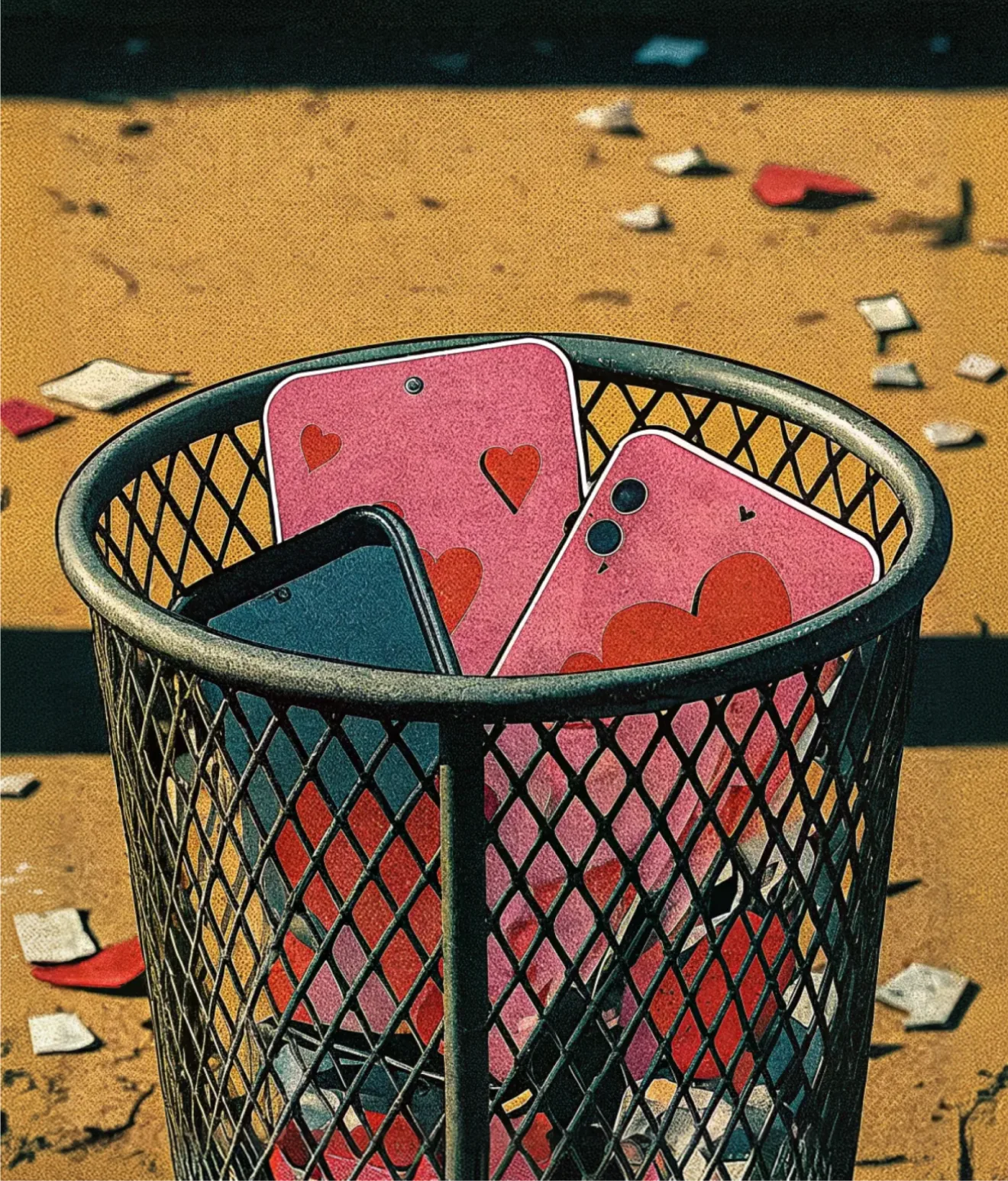
Marketing is a constant game of audience attention. What caused a wow effect last year may be scrolled past even by the most loyal subscriber today. 2026 brings not just new trends, but a fundamental change in how people perceive content and interact with brands.
If your strategy is still based on formats that worked in 2025, you risk being left behind. Let’s take a look at what you should give up now and what will replace it.
Visual content: is the ideal losing its appeal?
The sterile aesthetics of minimalism
Remember those beige accounts with perfectly aligned grids, where every pixel is in its place? It was cool until it became cliché. In 2026, such content is more likely to cause boredom than admiration.
The audience is oversaturated with flawless images – they are perceived as artificial, cold, and detached. Instead, there is a growing demand for the aesthetics of human error: uneven edges, creases, asymmetry, traces of real creativity. Content that looks like it was created by a real person with emotions, not a robot with a ruler.

Flat graphics without textures
Flat design still has its place, but it no longer evokes an emotional response. Visuals are becoming tactilely immersive – featuring hyper-realistic textures that create the illusion of being able to touch the screen and feel its surface.

Fabrics that look soft, rough wood surfaces, metallic sheen – these details hold your attention longer because your brain tries to “feel” what it sees. This works especially well in e-commerce, where you have to sell a product without being able to hold it in your hands.
Futuristic high-tech without context
Neon colors, glitch effects, cyberpunk stylistics – these still work, but only if there is a meaningful context. Simply adding a neon font for “coolness” is no longer enough.
Instead, nostalgic retro style is making a comeback, but not as a copy of the 90s, but as a reinterpretation: VHS aesthetics with a modern twist, pixel graphics combined with high resolution, vintage fonts that tell a story.
Static typography
The time when text was just text is coming to an end. In 2026, typography becomes a dynamic graphic object: words stretch, deform, move, and interact with other elements.

This is not just animation for the sake of animation – text becomes part of the visual narrative, where the shape of the letters reinforces the meaning of the message. Static posters with motivational quotes on a flawless background look outdated against the backdrop of lively, breathing typography.
PPC: what stops converting
Text ads without a visual component
Classic text ads still work in search, but their effectiveness is declining. Users are accustomed to videos, dynamic formats, and interactive elements. A simple text ad against a background of visually rich competitors is like a black-and-white TV in a store full of 4K monitors.
Video is becoming not just an additional format, but the basis of PPC strategy. Short videos showing the product in action, UGC content from real customers, and even vertical videos in search campaigns are no longer an experiment, but a necessity.

Campaigns based on keywords instead of intent
The approach of “let’s take 200 keywords and make an ad for each one” is becoming obsolete. Algorithms no longer look for exact matches – they analyze user intent, search context, and previous behavior.
Formats such as Performance Max and Advantage+ work at the level of intent, not syntax.
Therefore, campaigns built solely on classic keyword selection without understanding the user’s real needs are increasingly wasting budget.
Aggressive remarketing without personalization
“You viewed sneakers – here are 47 impressions of the same sneakers” – this approach no longer encourages people to buy, but rather irritates them. Users expect brands to be smart enough to understand the context.
Effective remarketing in 2026 is not about repeating the same thing over and over again, but about smart personalization based on first-party data: what a person has viewed, how much time they have spent on the site, whether they have added anything to their cart, and at what stage of the selection process they are. Without this context, remarketing becomes spam.
One creative for all stages of the funnel
Showing the same ad to someone who is hearing about the brand for the first time and someone who is visiting the product page for the third time is like selling a winter jacket in summer and winter using the same logic.
Effective PPC in 2026 requires adapting creative to the stage of the customer journey: for a cold audience – broad value and emotion; for a warm audience – specific benefits; for a hot audience – a final push, such as a discount or limited offer.
Relying exclusively on third-party data
Third-party cookies are dying – that’s a fact.
Campaigns that rely solely on purchased audiences and external segments are losing their accuracy and effectiveness.
First-party data is becoming not an advantage, but a basic requirement. Integration with CRM, tracking events on the website, collecting data through consent-based mechanisms – without this, PPC turns into a guessing game with an uncertain outcome.
SMM: formats that have run their course
Repurposing a single post for all platforms
Copying and pasting the same text on Facebook, Instagram, LinkedIn, and TikTok is like showing up to a business meeting in your pajamas because “it’s more comfortable.” Each platform has its own language, context, and audience expectations.
In 2026, universal content is perceived as lazy social media management. LinkedIn wants expertise and context, Instagram wants visual stories, Threads wants the brand’s live voice, and TikTok wants entertaining content even from serious brands.
Endless carousels with tips
“10 tips on how to…”, “5 mistakes that…”, “7 ways to improve…” – this format is oversaturated to the point of exhaustion. Carousels still work, but only if they are truly unique, visually captivating, and provide value that cannot be found in 10 seconds on Google.
Instead, there is a growing demand for in-depth content: long posts with personal experiences, case studies with figures, analyses of mistakes, honest stories about what didn’t work. This takes more time to create, but it works much better.
AI content for the sake of AI
“Look, a neural network drew this!” – This message no longer surprises anyone. AI has become a common tool, like Photoshop or a camera. Emphasizing the fact that AI is being used without a real idea behind it is meaningless.
The value lies in the concept, the story, the meaning. It doesn’t matter if you created the content yourself or with the help of Midjourney. What matters is what you want to say with it and whether it evokes an emotional response.

Hard sell in every post
“Buy,” “Order,” “Don’t waste time” – if all your content is a continuous CTA to buy, your audience will quickly get tired and unsubscribe. Social media is about building relationships, not turning your page into a 24/7 sales department.
In 2026, an effective strategy is a balance: 80% useful, entertaining, engaging content and 20% sales. People follow brands not to buy every day, but to get value that is enjoyable to interact with.
Ignoring direct sales as a channel
If your strategy is limited to posts in the feed and “write to direct to order,” you are missing out on huge potential. The audience expects instant service – responses within minutes, not hours, chatbots that work 24/7, and a personalized approach.
Direct is becoming a full-fledged sales channel where consultations take place, objections are addressed, and orders are placed. Without automation and fast human service, you will lose out to competitors who have already implemented this.
What should you do instead?

It’s not about giving up everything at once. But it’s important to realize that:
- The audience quickly adapts to new formats and just as quickly tires of the old ones.
- Algorithms are evolving towards understanding intent rather than mechanical keyword selection.
- Authenticity wins over perfection.
- Personalization and context matter more than mass appeal.
2026 is not about chasing every trend. It’s about understanding what works for your audience and abandoning what no longer works, even if it was once your signature move.
Want an audit of your current content strategy and an honest assessment of what no longer works? Write to us, and the MIM:AGENCY team will help you weed out the outdated and build what really converts in 2026.
