
Influencer marketing

__________
It is hard to find a person who is not on at least one social network. The statistics prove it: at the beginning of 2020, more than 4.5 billion people use the Internet, and the audience of social networks has passed the mark of 3.8 billion. By signing up to social networks, users become content creators themselves. By releasing themed content, they gain a like-minded audience. Which is what has attracted marketers.
Over the past five years, brands have increasingly partnered with influencers on social media to increase awareness or boost sales. Because of this, influencer marketing has grown from an ancillary marketing tactic to a $5-10 billion industry.
__________
What is Influencer Marketing?
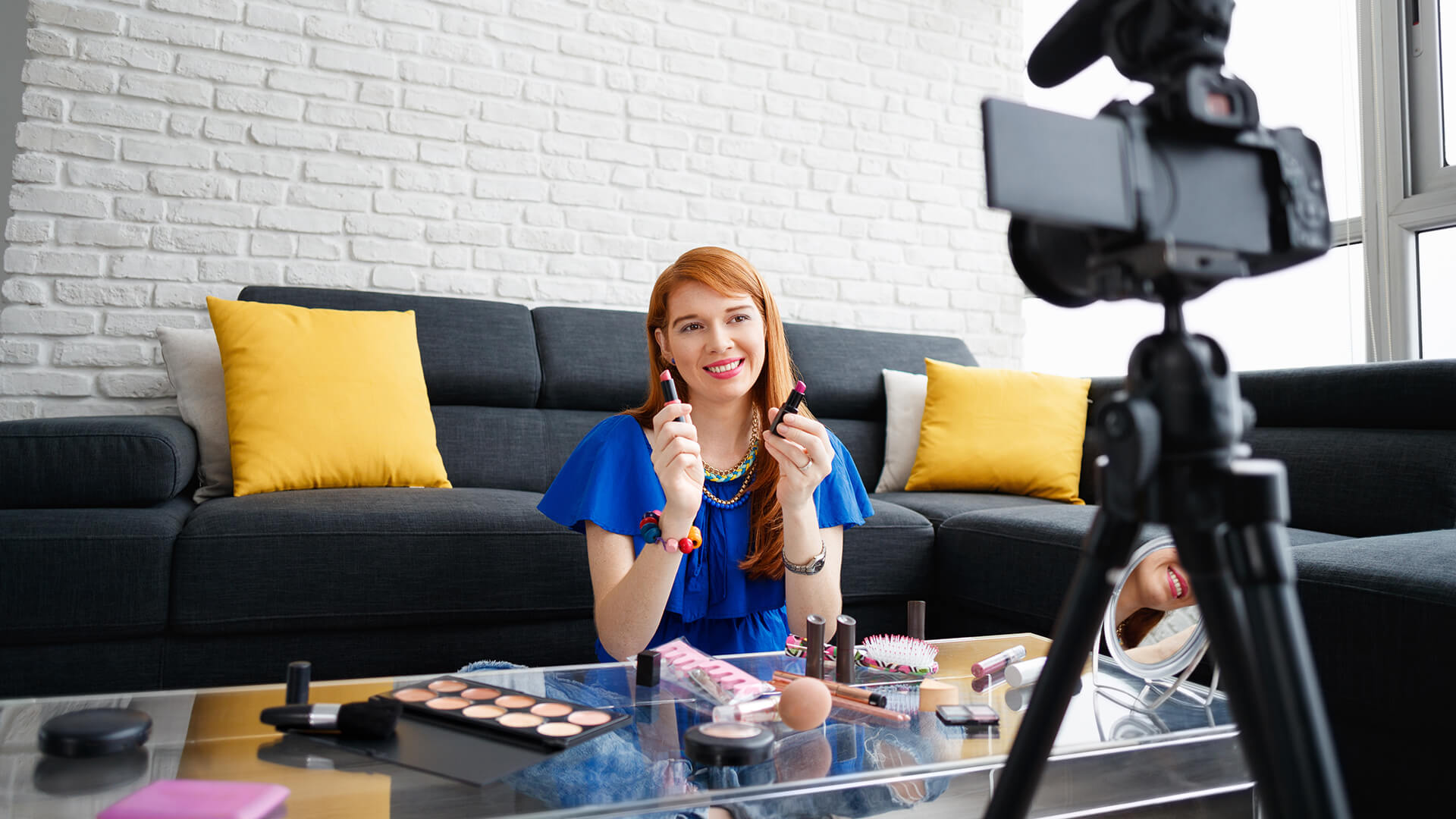
Influencer marketing is when companies partner with people who have a specific audience to increase brand awareness or conversion among their target audience.

If you’re a Canon marketer, for example, you pick a cool blogger who has the right audience of subscribers and arrange for them to share their views on a new camera with your subscribers. This format is useful not only because the product is recommended by “your” person, but also because people can honestly share their experiences with the camera. They can tell its pros and cons, giving both useful information to subscribers and feedback to the company at the same time.
Influencer marketing objectives:
- Increase brand awareness
- Increase reach and conversion rates
- Educate the audience
- Increase engagement and trust
- Increase sales
- Dispel some myths about the product, work off negativity
- Improve search engine results
- Show how the product “works”
- Create the “right positioning”

There are several common types of Influencers by number of subscribers:
- Megainfluencers are “stars” who have “over 100500” subscribers. Their advertising is expensive and engagement is low (1-2%). But if your goal is recognisability, they’re the ones for you.
- Macroinfluencers — 10,000-100,000 subscribers. Practically only pluses. High coverage of the target audience, quality content and, most importantly, they are always ready to cooperate.
- Microinfluencers — up to 10,000 subscribers. The plus side is a loyal audience that is interested in their content. The level of trust and engagement is 4-8%. Which is much more than the “stars”. Also much cheaper. They cooperate even for payment in the form of your product or service.
- Nanoinfluencers — up to 1000 subscribers. Small coverage, but what quality of presentation! After all, their audience is mostly friends or acquaintances.

What are the different types of Influencers?
Opinion leader — owns an audience in a certain area. It’s not the number of subscribers that matters, but the reach and credibility. As well as the ability to motivate a purchase.
Blogger — maintains a blog where he regularly updates content. He leads it for the purpose of entertainment or business (for example, to show his own authority). Easy to collaborate with as the blog can generate their main income.
Ambassador — a person who represents one brand. He shows all the pros and cons of using the product. Bring in ambassadors to increase engagement and reach.
Viner — makes short videos (2-20 sec) about some life situations.
Vlogger — an opinion leader who actively shares content on YouTube and has engaged subscribers.
Creator — a person who creates content. He may not have a large number of subscribers, but brands buy his content for money.
How to work in a mutually beneficial way?
Like any relationship, influencer marketing should be a two-way street. If your brand is the only party that benefits, you probably won’t get anyone to agree to a relationship with you, and if they do, they probably won’t have much of a commitment.
The average influencer compensation formula looks something like this:
$100 x 10,000 subscribers + extras = total rate
How to find the right Influencer?
There are different special platforms or ways to do this:
- Production centres (create and promote content themselves)
- Specialised agencies (create only promotional content and campaigns)
- Blogger exchanges (you can choose by criteria: hashtags, ratings, keywords. For example: Epicstars)
- Platforms (search for opinion leaders independently on social media)
96% of marketers don’t believe that finding Influencers (and influencer marketing in general) can be fully automated.

Statistics
The main advantage of influencer marketing is that it is not perceived as advertising. Very often it is native advertising. But now more and more often local authorities are enforcing the flagging of such posts. For example, in Germany, there is a fine for bloggers on Instagram who don’t tag their posts with “adverts”. Even still, 92% of shoppers tend to believe other people’s recommendations.
Here are some inspiring statistics about the impact of this type of marketing:
- 70% of young YouTube subscribers trust the opinions of opinion leaders
- On average, businesses generate $6.50 in sales. On average, businesses generate $6.50 for every $1 invested in influencer marketing. On average, businesses generate $6.50 for every $1 invested in influencer marketing
- 49% of consumers depend on influencer recommendations
- 89% of marketers say the ROI from influencer marketing is comparable or better than other marketing channels
And then there’s this statistic:

When Motorola launched their new range of smartphones, they realised that they needed to promote it on YouTube, as the majority of teenagers prefer this network. So, they selected 6 bloggers and arranged with them to make a video with their phone. One blogger made an awesome video where he tied his phone to a 10 foot rocket. This video led to these results:
- 11.6 million views
- 38.1 million social shares
- 122,000 website conversions (80,000 of which were first time visitors)
In 2020, people will be more accepting of bloggers who create content for just one brand, rather than promoting products from 3-6 brands. That is, adverts will be better received from brand ambassadors, according to Ben Jeffries, CEO of Influencer.
The influencer marketing market is expected to reach $10 billion by 2020. And according to platform Hootsuite, the global influencer marketing market will be worth $213.63 billion by 2022. And that’s half of the projected global business spend on digital. As paid advertising spend continues to rise on social platforms like YouTube and Instagram, companies have to find a way to survive. That’s where Influencer marketing comes in. Working with Influencers can be cheaper than paid advertising, and much more effective because you can buy loyal followers.
Over the past few years, industries such as fashion/beauty and photography have seen a huge rise in the popularity of influencer marketing. A recent survey showed that 57% of fashion companies are currently using influencer partnerships, and 21% will start using it soon.

Furthermore, influencer marketing isn’t going away anytime soon simply because the number of users on social media continues to grow. The popularity of social media, in turn, leads to an increase in the number of influencers, which means that’s where marketing spend is going. 65% increased spending on influencers, 33% left it the same and only 2% decreased.
It will be a long time before influencer marketing becomes obsolete. But you should expect the services of Influencers to become more expensive as they work great.
If you still don’t know whether to use this tool, try to find opinion leaders in your industry and observe what kind of content they share with people. Your competitors may have been winning with this for a long time. Well, if not, you can still give it a try. If these opinion leaders don’t have adverts booked, then it’s likely to be inexpensive. And you can try the effectiveness (or ineffectiveness) of this format on yourself.
Tomoson’s survey of 125 marketers shows that influencer marketing is one of the most effective marketing channels, along with email (who says email marketing is dead?).

On average, this industry (US data) brings $6.85 per dollar spent. Let’s look at the effectiveness of Influencer marketing by segment. In the FMCG segment it brought $11.33, in retail $10.48, in tourism $7.04, and the least effective was in gardening — $0.64 per dollar spent.
The most common budget is $1,000-$10,000 per year, followed by $100,000-$500,000 per year. 19 percent of marketers will spend between $1,000 and $10,000 per year on influencer advertising in 2020, and 18 per cent will spend between $100,000 and $500,000 per year. 7 percent of companies plan to invest more than a million dollars in influencer marketing in 2020. This suggests that influencer marketing is being used by a number of companies from small organisations to much larger brands.
And a bit of stats from mediakix for 2019.

17% of marketers in the survey — plan to spend more than half of their entire marketing budget on influencer marketing this year.
Also, according to the AdWeek survey, working with Influencers brings extra perks:
- 88% of Influencers tell friends about brands they’ve worked with;
- 72% will volunteer to talk about a brand after a paid partnership;
- 77% will be inclined to buy a product specifically from their sponsors rather than other brands.

Cons of Influencer Marketing:
- First and foremost, it’s a paid ad placement. And the brand is not immune to content failing. A blogger can always speak negatively about your product and influence your ad campaign in a way you didn’t want. Or it could simply create low-quality content that will invite ridicule. Even the most well-known companies face the unmanageability of a blogger and the negative repercussions from it.
- Not all countries have opinion leaders for every industry. Here are some statistics on the availability of topic influencers in the US (where they are almost everywhere).

Violation of any legal regulations and banned products for advertising. For example, recently, the tobacco company British American Tobacco and three other tobacco brands were warned by the Advertising Standards Authority (ASA). They used too young an Influencer – a 24-year-old model – for the advert. And according to the rules, you can’t use bloggers under 25 years old. Also, such products were advertised by Rami Malek and Lilly Allen. After that, ASA was banned from advertising vaping products in public profiles.

The most important KPIs of influencer marketing
In general, it all depends on the goals you are pursuing, but it is possible to highlight such indicators (and it is definitely worth tracking them):
- ROI
- Conversions
- Price per click (CPC)
- Click-through rate (CTR)
- Referral traffic
- Subscription/registration growth
- Audience loyalty
- Channel authority
- Engagement
- Reach
According to statistics from databox the best platform for influencer marketing is Instagram. But next comes YouTube, where it is very important to assess the authority of the channel and its internal activity. To avoid a situation with “dead souls”.

Influencer Handling Guide
And to get the whole structure lined up in your head, here’s a little guide on working with Influencers.
How to choose a blogger?
- Determine the target audience of the product. In marketing in general, you can’t get anywhere without this. Remember.
- Define for each segment of the target audience your interests and topics of Influencers. Spell out literally their day. From what they eat for breakfast to how they make decisions.
- Plan out the budget you’re willing to allocate. Keep in mind that the cost will consist of the cost of publishing and the number of audience segments. That is, the more segments – the more bloggers you will have to attract. Budget = number of audience segments * number of bloggers in one segment * cost of publishing.
How to find a relevant Influencer?
- By searching social media using keywords. Then you can also find similar ones by the recommendations that the algorithm will offer you.
- On blogger exchanges. For foreign bloggers: Famebit, Hire Influence, Influicity. Telegram chats: Insta Bloggers, Blogosphere, BerezhokBot.
How to analyse.
- .The main YouTube metrics are: demographics, geography, traffic sources and locations, baiting (can be determined by comments, Engagement Rate and retention on the video), traffic source. Some of the information you’ll have to request from the blogger. Or look at third-party services such as: Popsters, VidIQ. But you can always just evaluate the publicly available data: likes, comments and number of views.
ER (Engagement Rate) is a measure of the level of audience engagement with your content or channel. It is measured as a percentage of actions to reach. This metric is important for both the blogger and the advertiser. Engagement Rate = (number of likes/dislikes + comments + comments + sherings on the video) / number of video views.
Another useful and simple way to know what the audience demands is the approval rating. It is calculated using the following formula:
Approval rating = number of clicks on the likes button / number of views
- For Instagram, demographics and geography are also important indicators. But this data should be requested from the Influencer itself, you can’t see it on third-party services. Also, the gender and age of the audience are important. Pay attention to such statistics: actions with stories and posts (likes, comments, reposts). You can determine if it’s a spoof by looking at your subscriber list, comments and number of likes.
This is a clear example that some comments are written by bots.
Engagement Rate. For example, a blogger has 200,000 subscribers, and the last post got 2534 likes and 365 comments. It turns out that ER = (2534 + 365) / 200 000* 100% = 1.4%.
Optimal ER for bloggers depending on the number of its subscribers:
- from 5-10 thousand people the optimal figure is 10-20%;
- more than 10 thousand subscribers ER is up to 5%;
- more than 100 thousand subscribers — 3%;
- for million-strong bloggers — up to 1%.
How not to screw up?
- Do not cooperate with bloggers who advertise everything. For example, you see that the blog is about healthy eating, but the blogger advertises cakes and anything else.
- Always write to the contact that was specified by the blogger for communication. If you are not answered – remind yourself again. But do not impose, perhaps you are simply not interested in this Influencer.
- Properly compose your offer to the blogger. Make a clear message, where there will be all the information about you and what you want to get from cooperation.
- Clarity should be in everything. And especially in the brief, because the biggest fakapas happen because of a vague brief. Give specific instructions, but give freedom in non-principled questions. He knows perfectly well what goes into his audience. And if he doesn’t, then consider whether to contact him.
- If the blogger is not an ambassador of your brand, it is likely that he can place ads of your competitors. No one is immune to this.
- When the brief is not properly written or when you give full rein to an Influencer, negative reviews can also occur. Again, no one is immune from this either. But if the criticism is constructive, maybe listen to it after all? Ask the blogger to show the post to you before publishing, just in case. But you don’t have to fix the native presentation of the material, just check the content for critically inappropriate points.
Conclusion
The fact is, influencer marketing isn’t going anywhere.
Yes, it can’t be effective for every brand or company, and the best way to find out is to test it. Instead of running a couple of one-off campaigns and seeing what happens, take the time to set very clear goals, target KPIs and a budget.
See how others in your industry approach influencer marketing, which of their sponsored content has performed well and why. Take your time, and find opinion leaders who fit your brand voice and style, and who will take the time to understand your product and promote it in a creative and unique way.
